


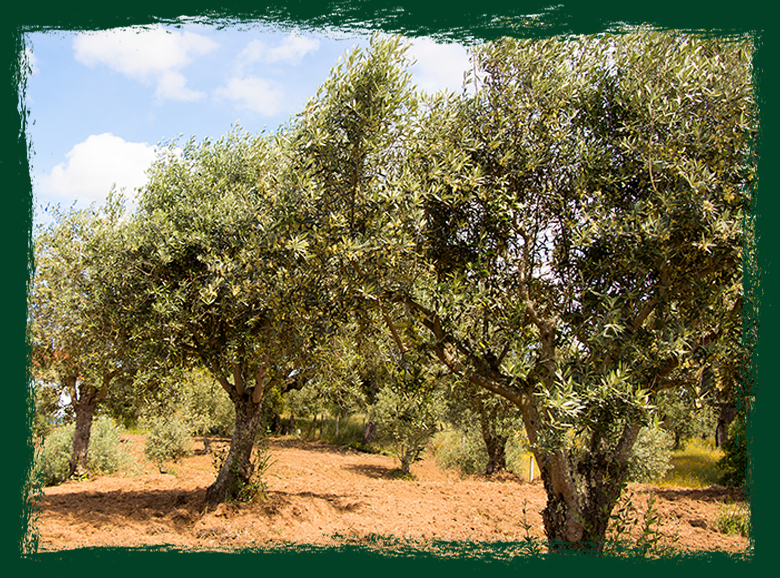
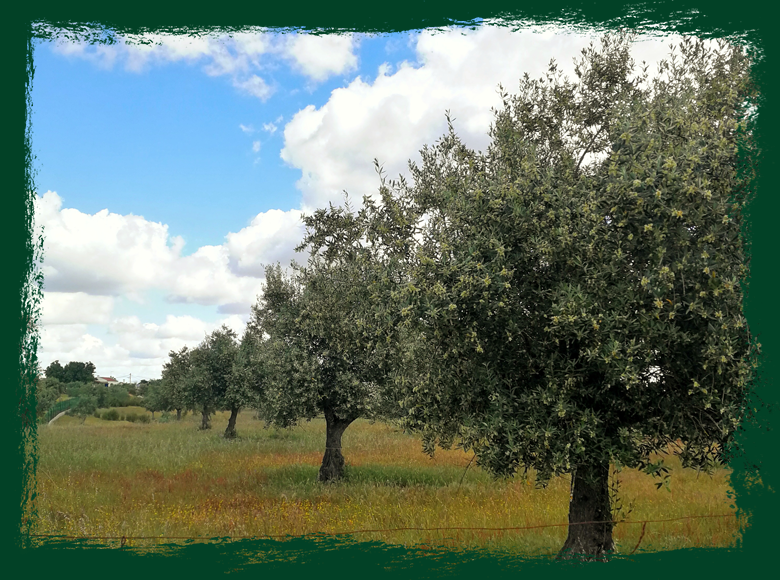
We do not use sythetic fertilizers, pesticides or herbicides. We want unsaturated soils and clean water ( wich is a problem in Alentejo) for future generations.
We are still lucky to have the organic matter offered by the animals and to nourish the soil with material from pruning cuts and leaves of the trees themselves.
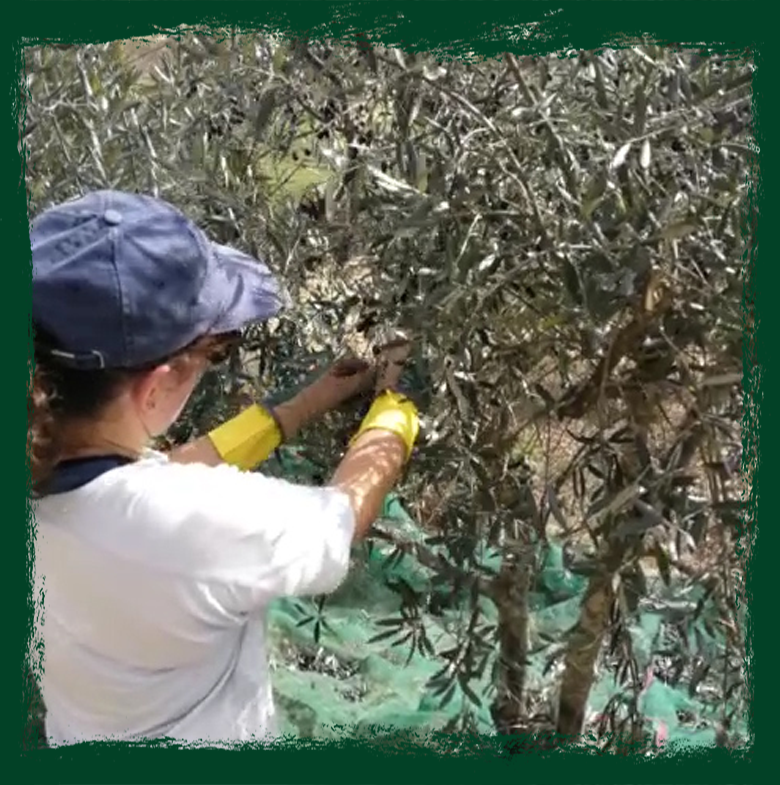
Our olive grove is the traditional rainfed one, that is, this classification says that there are 200 trees per hectare without an installed irrigation system. We aheve an olive grove of olive trees that are not the most productive, but wichare certainly the ones that make the smoothest and fruitiest olive oil in the world. The picking is manual, done by us and with local people with the experience and knowledge of Alentejo tradition.
In opposition to ours, there are the moder super-intensive olive groves, or hedgerow olive groves, with irrigation systems and about 1900 olive trees of highly profitable species per hectare. All picking is done by machines as is the application of phytopharmaceuticals to guarantee production.
We do the process of ripping the branches, so that the olives fall on the net to be collected later.
With the help of the cleaners, we remove the leaves and small branches in order to take only the olives to the mill.
At the end of the day the bags of olives picked are immediately take to tjhe mill to begin the process of extracting the olive oil.
Cleaning: In this part the Olives are cleaned of leaves (again), washed only with water an weighted.
Milling: By mechanical action, the olives are transformed into a paste.
Beating: The milling paste will be beaten and heated up to 27ºC, considered a cold extration, to facilitate the extraction of the oil..
Centrifugation: With this process we separate the vegetable part and water (80%) from the oily part (20%). Now we have olive oil with some water separate from the pomace (water, plant material, and pit) This by-product makes a great natural fertilizer.
Decantation: Water and oil do not mix, so it is easy to separate (decant) and filter. It is then stored in stainless steel tanks until the packaging phase.

